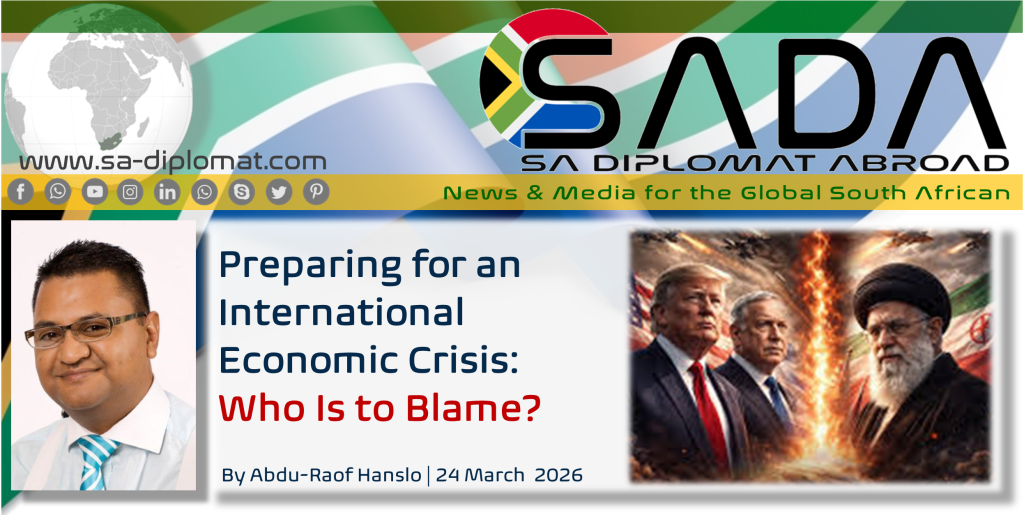
To assign responsibility to any individual or state, it is first necessary to understand the sequence of events that have unfolded in the Middle East over recent weeks, as well as the deeper geopolitical tensions that have been building over decades.
On 28 February 2026, a joint military operation involving Israel and the United States was carried out against Iran. This operation marked a significant escalation in a long-standing rivalry and raised immediate concerns about regional stability and global economic repercussions. Critics argue that the strike was not a response to an imminent or direct attack on either nation or their allies, thereby raising questions about whether it can be justified under the principle of self-defense.
The roots of this confrontation extend far beyond recent events. For decades, Israel has consistently expressed concern over Iran’s regional influence, military capabilities, and nuclear ambitions. Under the leadership of Benjamin Netanyahu, Israel has repeatedly called for stronger international action against Iran, often urging its allies—particularly the United States—to adopt a more aggressive stance. These calls have frequently included proposals aimed at weakening or fundamentally altering the Iranian government.
In this context, many analysts argue that Netanyahu found a receptive ally in Donald Trump. The alignment of political priorities between the two leaders appears to have played a pivotal role in shaping the current crisis. The decision by the United States to participate directly in military operations has drawn both domestic and international scrutiny, particularly regarding whether sufficient consideration was given to the broader consequences.
A central element of the unfolding crisis is the Strait of Hormuz. This narrow maritime corridor, approximately 33 kilometers wide at its narrowest point, serves as one of the most critical chokepoints in the global energy supply chain. Although geographically shared between Iran and Oman, the primary deep-water shipping lanes used by large oil tankers pass closer to Iranian territorial waters, making them particularly vulnerable to disruption.
Following the strikes on its territory, Iran responded swiftly by restricting access through the Strait of Hormuz for vessels linked to its adversaries, including the United States, Israel, and their allies. This move has had immediate and far-reaching implications. A substantial proportion of the world’s oil and liquefied natural gas passes through this corridor, and any disruption—partial or complete—can trigger sharp increases in global energy prices.
The consequences of this disruption are already being felt. Energy markets have reacted with volatility, and concerns are mounting over inflationary pressures, supply chain disruptions, and the potential for a broader economic slowdown. Even the world’s largest economies are not immune to these effects, as higher energy costs ripple through industries ranging from manufacturing to transportation.
The crisis has also heightened security risks for Gulf nations, including Saudi Arabia, Qatar, Bahrain, Kuwait, the United Arab Emirates, and Oman. These states host significant U.S. military installations and infrastructure, making them potential targets in any escalation. Their economic stability is also closely tied to energy exports, further amplifying the stakes.
Iran, which has long anticipated the possibility of such a confrontation, has responded not only through maritime restrictions but also with missile strikes targeting U.S. military assets in the region, as well as Israeli positions. Israel, in particular, has absorbed a significant portion of the retaliatory actions, underscoring the direct and immediate risks associated with the conflict.
At the same time, it is important to acknowledge that Iran’s actions over the years have also contributed to regional instability. These include attacks on energy infrastructure in neighboring countries. Such actions have endangered civilian populations and disrupted economic activity, with reports emerging of casualties and damage across multiple states in the region.
Diplomatic efforts to ease tensions have also faced setbacks. Over the past year, there have been intermittent attempts at negotiation between the United States and Iran. However, these efforts have frequently been undermined by renewed hostilities, mutual distrust, and competing strategic interests. Each breakdown in diplomacy has brought the region closer to the current state of confrontation.
In assessing responsibility, the situation is complex and multifaceted. One perspective holds that Israel initiated the immediate chain of events through its military actions, while the United States bears responsibility for its decision to participate in the escalation without a clearly defined long-term strategy or a comprehensive assessment of the global economic consequences. At the same time, Iran’s retaliatory measures and broader regional activities cannot be overlooked as contributing factors.
Key figures often cited in this context include Benjamin Netanyahu, for his long-standing advocacy of assertive policies toward Iran, and Donald Trump and his administration, for engaging in a conflict that carries significant and potentially unpredictable global implications.
Beyond questions of blame, the crisis has revealed deeper structural shifts in the global order. The response from the international community has been notably fragmented. Several European nations have been cautious in their support, reflecting a growing divergence in strategic priorities between traditional allies. This lack of unified backing highlights evolving geopolitical dynamics and raises questions about the current balance of power.
In conclusion, the unfolding conflict represents more than a regional dispute—it is a potential catalyst for a broader international economic crisis. The disruption of critical energy routes, combined with escalating military tensions, underscores the interconnected nature of modern geopolitics and global markets. As the situation continues to evolve, the world faces not only the challenge of assigning responsibility but also the urgent task of preventing further escalation and mitigating the economic fallout.
Disclosure
The information provided in this article is for general informational and educational purposes only and does not constitute financial, investment, or professional advice. All views and opinions expressed are those of the author and are based on personal judgment at the time of writing.
While every effort has been made to ensure the accuracy and reliability of the information presented, no representation or warranty, express or implied, is made regarding its completeness, accuracy, or suitability. The author accepts no responsibility or liability for any errors, omissions, or for any losses or damages arising from the use of this information.
The author may hold positions in, or have interests in, financial instruments or assets discussed in this article, which could present a potential conflict of interest.
Readers are encouraged to conduct their own research and consult with a qualified financial advisor or professional before making any financial decisions.